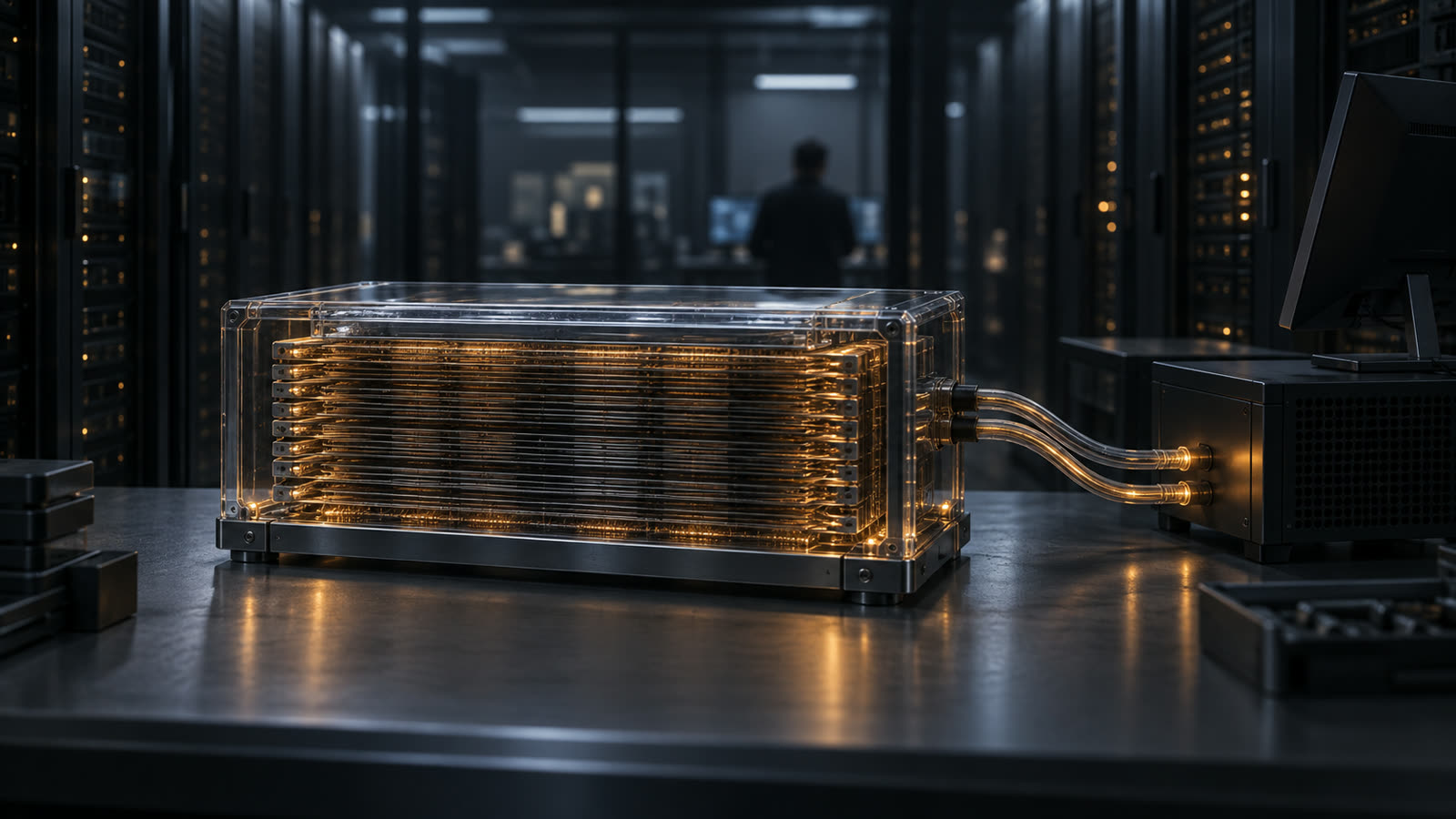
DeepSeek is asking customers to look past the model itself and stare at the cache. Its V4.1-Flash release says the global key-value cache behind a long context can be compressed to 890 bytes per token—about a quarter of the company’s previous Flash generation—while cutting the prior generation’s HBM requirement to one quarter and its SSD requirement to one eighth. For agent builders who keep large histories alive across many tool calls, that is a concrete claim about a bill that often hides behind an inexpensive input-token rate.
The release, dated September 10, makes V4.1-Flash available as deepseek-flash with native image understanding. It also changes an existing customer contract in practice: beginning September 14 at 04:00 UTC, DeepSeek says requests sent to deepseek-v4-pro will temporarily route to V4.1-Flash and be charged at Flash rates, until V4.1-Pro arrives.
That makes the launch more than another benchmark chart. It is an architecture decision, an API migration, and a pricing event wrapped into one. The appealing story is clear: less persistent state means more economical long-running agents. The inconvenient part is just as clear: a 552-billion-parameter backbone, variable reasoning effort, retries, tool calls, data controls, and operational support can still turn a cheap rate card into an expensive system.
The part of the model that stays after the prompt
When a model continues a conversation, it does not usually recompute every attention detail from zero. It retains key-value state—often called a KV cache—so the next token can attend to prior context without replaying the full sequence. That is useful for a coding agent working through a repository or a document agent moving across a large file set. It is also memory-intensive, especially when many sessions remain warm.
DeepSeek’s model card describes a causal encoder-decoder design with 552 billion backbone parameters, but 8 billion active parameters during input prefill and 16 billion during decoding. It says the design projects the decoder’s global KV cache from the final encoder hidden states. A bounded replay method is intended to reconstruct some short-window attention state instead of persisting it to SSD. Combined with sparse-attention techniques and low-precision cache storage, DeepSeek reports the 890-byte-per-token footprint.
Those are official technical claims, not an independent capacity audit. Still, they identify the mechanism: reduce the state that must stay resident, then accept carefully bounded recomputation when needed. That can matter more to an input-heavy agent than a headline parameter count does.
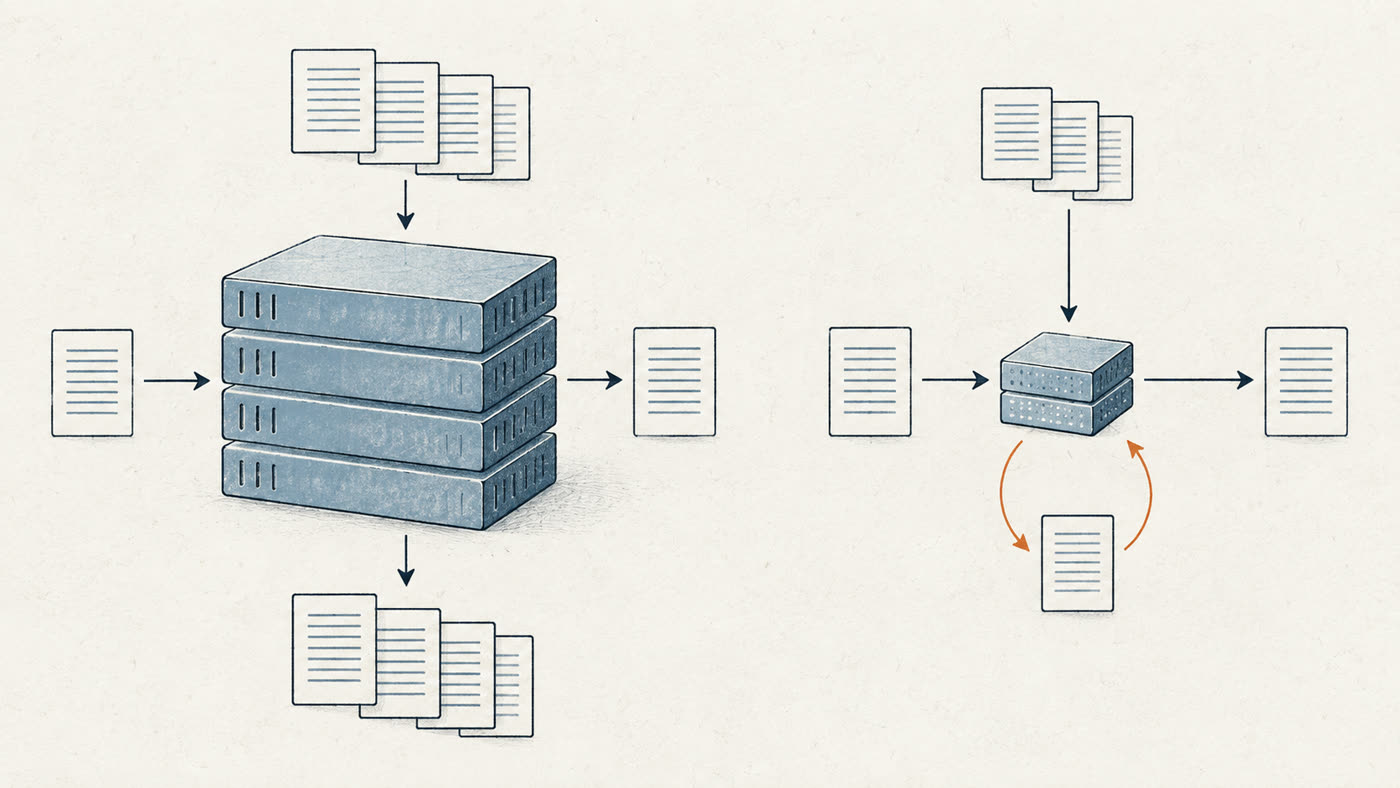
The right question is not whether a smaller cache is good. It is whether it lowers cost per successful task for a specific workload. A support agent with short, disposable chats may barely notice. A software agent that revisits a large codebase, a legal-review workflow with repeated document context, or a multimodal system holding image-and-text sessions may have much more to gain—if cache hits are high and quality does not fall when context is reused.
The pricing headline comes with a model-identity change
DeepSeek says off-peak pricing remains half of peak pricing and that the new pricing took effect at 04:00 UTC on September 10. Flexible batch workloads can benefit from that spread. US teams should not treat it as a universal discount: the operationally convenient time in one region can be peak time in another, and a cost model has to map traffic patterns to the provider’s UTC schedule.
The more immediate issue is compatibility. The company says retired deepseek-v4-flash and deepseek-v4-flash-vision-exp identifiers temporarily route to V4.1-Flash. Then its deepseek-v4-pro traffic will do the same beginning September 14. A customer that pins an identifier but assumes stable behavior is effectively accepting a model swap.
That may be reasonable during a transition. It is not a reason to skip regression checks. Existing prompts, tool-call parsing, reasoning verbosity, latency distribution, moderation behavior, image handling, and fallback logic should all be exercised before a provider-side routing change becomes production traffic.
| Area | Evidence from the release | Buyer check |
|---|---|---|
| Persistent context | DeepSeek reports 890 bytes per token and lower HBM/SSD requirements versus its previous Flash generation. | Measure cache reuse, concurrency, replay overhead, and end-to-end infrastructure cost on the real workload. |
| Agent performance | The model card reports vendor-run benchmark results at maximum reasoning effort and named scaffolds. | Run a fixed task set with the same prompts, tools, budgets, and evaluation rubric across candidates. |
| API continuity | Legacy Flash IDs and, temporarily, V4-Pro requests route to V4.1-Flash. | Pin versions where possible; test structured output, tool calls, latency, and rollback before the routing date. |
| Open deployment | Weights are MIT-licensed and the model card lists Transformers, vLLM, SGLang, Docker Model Runner, and quantization paths. | Price GPU memory, networking, security review, monitoring, uptime, and the people required to operate the stack. |
Evidence label: official DeepSeek release and model card. “Buyer check” is AI News Fab analysis.
Benchmarks describe a setup, not a deployment verdict
The V4.1-Flash model card reports a 90.6% Pass@1 score on Terminal-Bench 2.1, 30.0% on Terminal-Bench 3.0, and a 74.2% resolved rate on DeepSWE v1.1. Those figures are notable, especially because the release compares the model with named frontier systems. They should also be read with the conditions attached.
DeepSeek says its instruct results use maximum reasoning effort, a one-million-token context window, specified sampling settings, and named agent harnesses. The card even shows different results across scaffolds. That is useful disclosure: it confirms that the harness is part of the product outcome. It is also a warning against treating a benchmark percentage as a portable property of a model.
Independent teams should reproduce a smaller version of that discipline. Keep the same task corpus, repository snapshots, tool permissions, time budget, max steps, and human scoring rubric. Record first-pass success, recovery success, wall-clock time, input and output tokens, cache-hit rate, tool failures, and intervention minutes. The most relevant cost is not dollars per million tokens; it is dollars and operator time per accepted outcome.
Open weights shift the bill, rather than erase it
The Hugging Face model card lists an MIT license and paths for Transformers, vLLM, SGLang, Docker Model Runner, and several quantization options. That expands the menu for teams that need more deployment control. It does not make the infrastructure small.
A 552B-backbone MoE model can demand substantial GPU capacity, high-bandwidth networking, storage, quantization work, and careful serving software. DeepSeek itself invites organizations planning a 2,000-GPU deployment plus a storage cluster to talk. That is an unusually direct reminder that low active parameters and low cache state solve only part of the fleet problem.

For US enterprise buyers, the due diligence list remains familiar: where requests and retained data reside, what logs are held, how rate limits and incidents are handled, whether a model revision can be rolled back, and who owns the response when an agent takes an unwanted action. Open availability changes some levers; it does not remove governance work.
Who should pay attention now
V4.1-Flash deserves attention from teams with long, repeated contexts: coding agents, document-intensive workflows, multimodal review systems, and platforms whose margin is eaten by warm sessions. Those teams should test it because a smaller cache can translate into a meaningful operational advantage.
It is less urgent for buyers whose primary constraint is short-task accuracy, regulatory fit, provider support, or a stable model contract. They should not migrate merely because a list price falls or a provider routes an older name to a new model.
DeepSeek’s release is valuable precisely because it makes a normally invisible part of AI economics visible. The cache can be cheaper. The agent still has to work.
Sources
- DeepSeek: Introducing DeepSeek-V4.1-Flash
- DeepSeek V4.1-Flash model card and technical report
- DeepSeek Harness
- AI News Fab: Gemini Lands on Windows, but the Real Product Is Access—Not Local AI
Summary: DeepSeek V4.1-Flash makes its case on cache compression and lower-cost long-context operation. The release is worth testing for input-heavy agents, but its published benchmarks, provider routing changes, self-hosting footprint, and enterprise controls all require workload-level validation.