
Dek: Two four-year orders cover dedicated AMD GPU clusters, with roughly $133 million in contractual prepayments. The public filing establishes a commitment, but it does not show that the first payment arrived or disclose the full conditions governing the deal.
Key takeaways
- Alignment Engine entered a master services agreement with an unnamed customer on September 22, 2026. Two initial 48-month orders have an aggregate value of approximately $1.17 billion.
- The company describes approximately $133 million in contractual prepayments. About $40 million was due following execution of the first order; the public materials do not confirm receipt.
- The balance is described as payable on take-or-pay terms, subject to the orders and agreement. Delivery, acceptance, service-level, and performance requirements also apply.
Volato Group’s headline number is large, but the useful question for a reader is narrower: what does the customer owe under the disclosed orders, and when could money actually change hands? The September 28 filing says Volato’s Alignment Engine business entered a master services agreement, or MSA, with a customer on September 22. Two initial orders under that agreement cover dedicated, single-tenant AMD GPU clusters over 48 months and together total approximately $1.17 billion. The customer is unnamed. The filing and accompanying company release establish the orders; they do not turn the four-year total into cash already collected. SEC Form 8-K; company release filed with the SEC.
What the $1.17 billion covers
The two orders divide the planned service into an AMD Instinct MI355X phase with a contractual start of December 31, 2026, and an MI455X phase with a contractual start of June 30, 2027. Each runs for 48 months and is described as a dedicated single-tenant cluster at an Ohio campus. Those dates are contractual service starts, not evidence that hardware has already been delivered, accepted, or used by the customer. The filing does not disclose how much of the $1.17 billion belongs to either phase. SEC Form 8-K.
The aggregate figure also has a defined boundary. It refers to the two initial orders, while any additional orders require the customer’s express written authorization. A reader therefore should not treat possible later business as part of the announced commitment. Nor does the total reveal the number of GPUs, their configuration, the capacity allocated to either order, or the price assigned to each phase. Without those details, the public disclosure cannot support a per-GPU price or a comparison of what the customer pays for the two generations. SEC Form 8-K.
AMD’s product pages identify the MI355X and MI455X, which clarifies the product names in the order announcement. Those listings do not verify an order-specific shipment or acceptance. For this contract story, the critical distinction is between a named hardware platform in a signed order and evidence that the contracted service has begun.
How the prepayments are described
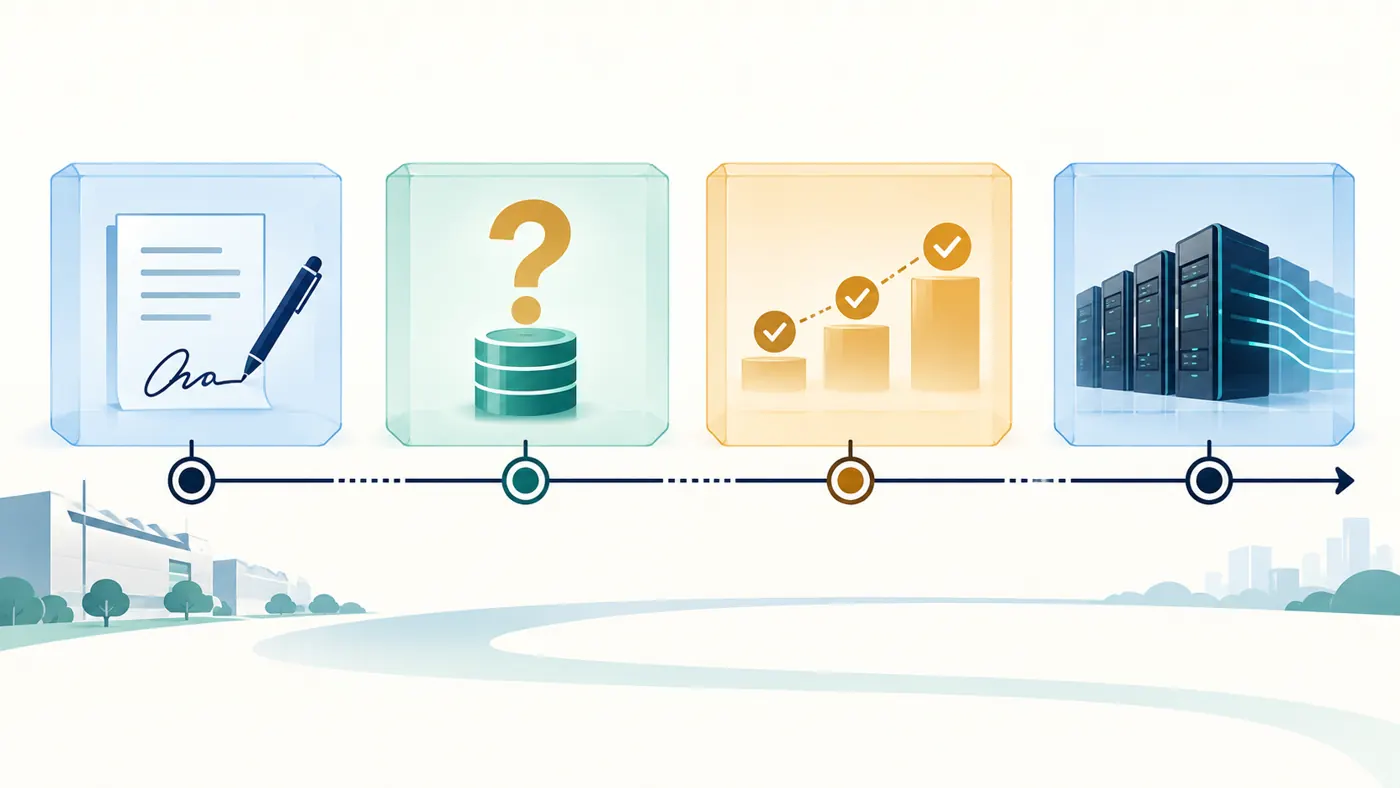
Volato’s SEC-filed release says the orders include approximately $133 million in contractual prepayments. Approximately $40 million was due following execution of the initial order. Other prepayments are staged around specified dates and equipment-shipment milestones. That language supplies a payment structure, but not a public receipt: the disclosed materials do not say that Volato or Alignment Engine has received the approximately $40 million. They also do not provide a complete public schedule showing the date and amount of each remaining installment. Company release filed with the SEC.
The distinction between an amount due and a payment received matters here. A shipment-linked installment has its own milestone, so assigning all $133 million to the signing date would erase the staging the company disclosed.
The documents do not provide the complete milestone table or accounting treatment needed to map every dollar to a particular reporting period. The distinction matters for anyone trying to follow the order from signing through delivery: a stated due date identifies an obligation, a shipment milestone marks a further condition for another installment, and a contractual service start identifies when a phase is scheduled to begin. None of those disclosed markers supplies a full record of collections or establishes recognized revenue.
What “take-or-pay” adds—and what it does not settle
The release describes the remaining contract value as payable on take-or-pay terms, subject to the agreements. That wording can suggest a payment commitment tied to reserved service capacity, but this is an interpretation of the company’s description, not a separately disclosed contract term. It does not establish that all $1.17 billion is immediately payable. The public filing identifies delivery, acceptance, service-level, and performance requirements. SEC Form 8-K; SEC-filed release.
Those requirements are not minor footnotes to the payment story. A customer commitment and a provider obligation exist together: the agreed service must be delivered under the contract’s conditions, and acceptance and performance may affect what happens next. The full MSA is not attached to the filing; the listed exhibit is the company release. The public cannot inspect the complete acceptance tests, service remedies, cancellation provisions, or every payment condition from the disclosed materials. Treating the phrase “take-or-pay” as a substitute for those missing terms would give readers more certainty than the record allows.
The announced service starts also do not establish when revenue will be recognized; the disclosed materials provide no recognition schedule. The two starts are six months apart, and the filing does not allocate the total order value between them. That leaves no public basis for assuming that the value, payment obligations, or accounting outcome will be evenly divided across the two phases.
The strongest case for the deal, and its limit
There is a substantive counterpoint to caution about the headline value: this is more concrete than a prospective sales pipeline. The SEC filing reports an executed MSA and two initial orders, identifies their four-year terms and contractual start dates, and the release states prepayment commitments. Volato calls it its first major customer commitment and describes the counterparty as a “large AI customer.” The existence of signed orders is the central fact, even though the customer has not been named. SEC Form 8-K; SEC-filed release.
But signed orders and settled economics are not identical. The filings leave the phase prices, detailed payment calendar, customer identity, GPU counts, and receipt of the first prepayment undisclosed. They also leave the full MSA unavailable for public reading. None of those gaps invalidates the orders; each limits what an outside reader can conclude about collection and ultimate revenue. The record does not say either phase has been delayed, and its contractual dates should not be rewritten as forecasts of a delay.
Future disclosures of payment receipts, detailed terms, acceptance, and revenue would answer the remaining questions. Until then, the signed commitment is documented, while its cash and accounting outcomes remain unconfirmed.