
Dek: Alibaba has outlined a path toward much larger Qwen models, but the weights available now belong to an earlier architecture preview. Here is where the announcement ends and hands-on testing begins.
Alibaba’s September 22 announcement created two different stories that are easy to collapse into one. The company says Qwen 4 is in training. It also points to future Qwen 4.5 and Qwen 5 models that it projects will reach 5–10 trillion parameters. Neither statement means developers can download the full Qwen 4 family today, and the larger number is not an announced size for Qwen 4.
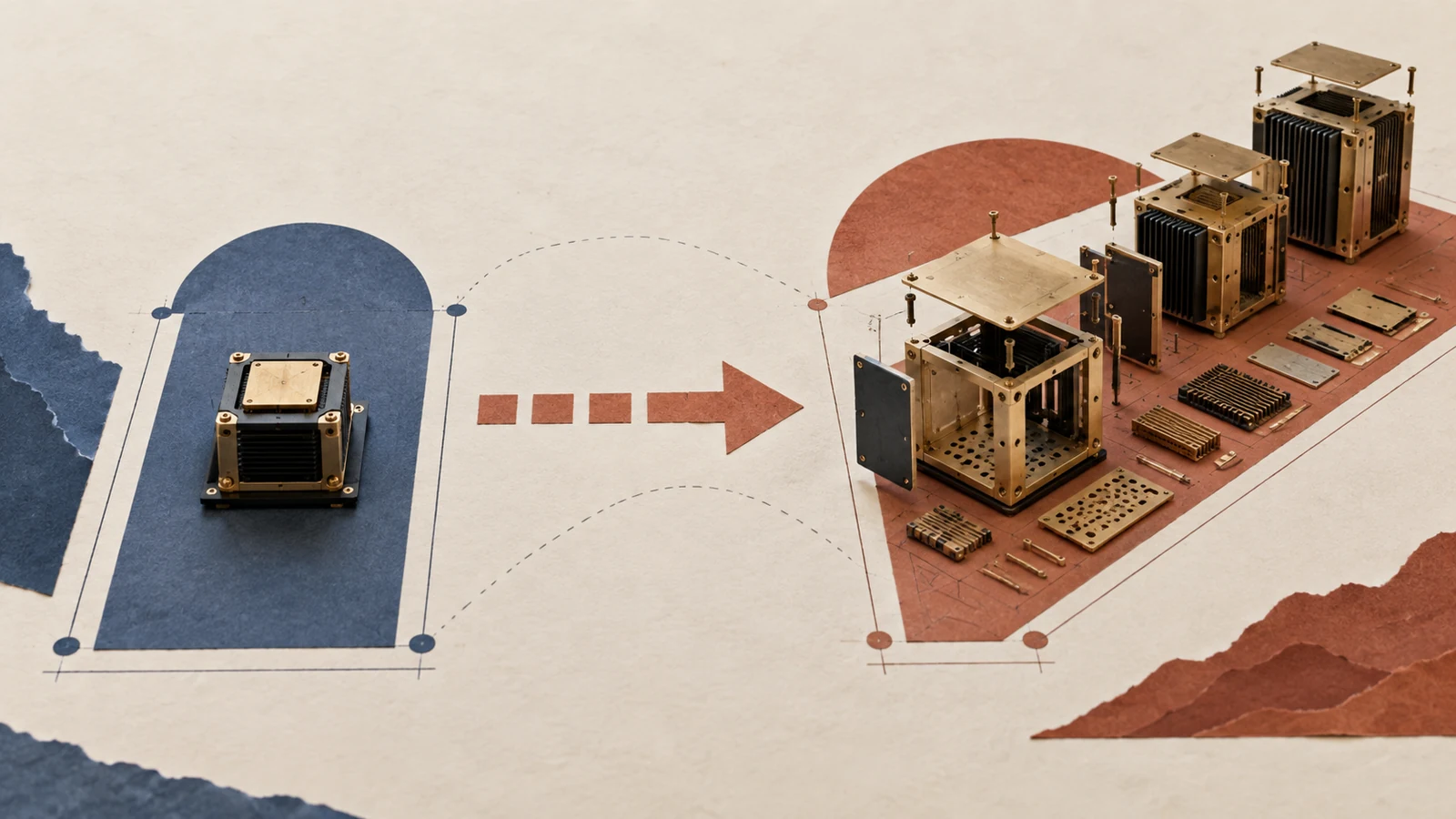
There is, however, something concrete to examine. Alibaba released the open weights for Qwen3.8-Flash-Next on August 26, describing the model as an early preview of architecture intended for the Qwen 4 family. Its official repository and model page give developers a current artifact to test. The distinction matters for anyone deciding whether to spend time on a local evaluation now or wait for a full-family release.
What Alibaba announced about Qwen 4
The Alibaba Cloud roadmap release says Qwen 4 is currently in training. It assigns the 5–10 trillion-parameter projection to subsequent Qwen 4.5 and Qwen 5 series. In his Apsara Conference keynote, Alibaba Group CEO Eddie Wu also described a plan for a model at that scale and said researchers are studying recursive self-improvement. His characterization of “meaningful progress” on that research is a company claim; the keynote does not independently demonstrate it.
The official materials reviewed as of September 25, 2026, 20:13 KST did not provide a full-Qwen-4 release date, model card, downloadable full-family weights, benchmark results, parameter accounting method, API price, or access terms. That leaves a practical limit on the announcement: it establishes work in progress and a larger-model ambition, but not a product that developers can evaluate as Qwen 4.
The parameter figure also needs careful reading. Alibaba has not specified whether the future 5–10 trillion scale counts total parameters, parameters active for each token, or something else. Those distinctions can change what a number implies for deployment. Even a precisely defined parameter count would not, by itself, establish quality, reliability, speed, or affordability.
What developers can download now
Qwen3.8-Flash-Next is the available model in this story. Alibaba calls it an early architectural preview, and its official model page supplies downloadable weights and supported inference frameworks. The repository says the production-oriented Qwen3.8-Flash is based on the preview architecture and adds production features. Neither description turns the preview into a release of the full Qwen 4 family.
The preview is a multimodal mixture-of-experts model. Alibaba describes a 125 billion-parameter main model, an additional 51 billion-parameter n-gram embedding table, and 6 billion parameters activated per token. These are different measurements: the main model and embedding table describe components, while the activated figure describes per-token computation. Calling it simply a “6B model” or folding the figures into an unqualified total would obscure what the repository actually says.
| Item | Official status | What it means for a developer |
|---|---|---|
| Qwen3.8-Flash-Next | Open weights released August 26 | An early architecture preview can be downloaded and tested. |
| Qwen 4 family | In training as of the September 22 announcement | No full-family weights or release date were specified. |
| Qwen 4.5 and Qwen 5 | Projected 5–10 trillion-parameter scale | A later roadmap target, without a disclosed accounting method or access terms. |
A local run is a useful lead, not a Qwen 4 benchmark
One developer has posted a concrete account of using the preview outside Alibaba’s published setup. In a September 6 QwenLM/Qwen GitHub Discussion, user shyringo says a self-built native-C runtime ran Qwen3.8-Flash-Next on an Intel Core i5-1340P machine with 32 GB of memory, Windows 11, and WSL2. The author reports 5.03 tokens per second for a single conversation and 1.64 tokens per second on an 8 GB RAM path.
Those numbers describe one author’s reported run of the preview, with a particular machine and runtime. The discussion showed zero comments, and the research report found no independent replication or later update. They are not controlled comparative results, expected performance for other machines, or measurements of Qwen 4. For a developer, the post is a starting point for questions about runtime and memory constraints, not a basis for choosing a production deployment.
How to read the roadmap before making a decision
A September 22 r/LocalLLaMA discussion put “Qwen 4 announced” in its title. Participants speculated about model sizes, and at least one asked for a source. That discussion reflects interest in the announcement; it does not establish a released model or measure wider developer sentiment.
For teams considering a hands-on test, the present choice is narrower and clearer. They can inspect the official Qwen3.8-Flash-Next repository, download its preview weights, and assess whether its architecture is relevant to their own workloads. That evaluation would say something about the preview under their conditions. It would not predict the capabilities or costs of a full Qwen 4 release, much less the later 5–10 trillion-parameter series.
For teams planning future adoption, several questions remain open: when the full Qwen 4 family will ship; what sizes, architecture, license, and API terms it will have; how Alibaba will account for the later parameter target; and whether access conditions will meet US deployment needs. The reviewed announcement did not specify region-specific availability or pricing for the US or other English-speaking markets. A comparison with released alternatives will require actual model terms, comparable benchmarks, and cost data.
Alibaba’s roadmap is more than an empty promise: it says Qwen 4 is being trained, and an earlier open-weight model exposes a piece of the intended architecture now. But the actionable artifact today is Qwen3.8-Flash-Next. Treating it as a preview preserves the value of testing what is available while leaving the still-unreleased Qwen 4 family to be judged when Alibaba supplies the model and evidence needed to evaluate it.