Dek: The Chinese memory maker says its fifth-generation platform can produce at least 50% more gross dies per wafer than its predecessor. The number matters—but it is not a yield figure, a shipment forecast, or evidence that CXMT can supply the high-bandwidth memory used by AI accelerators.
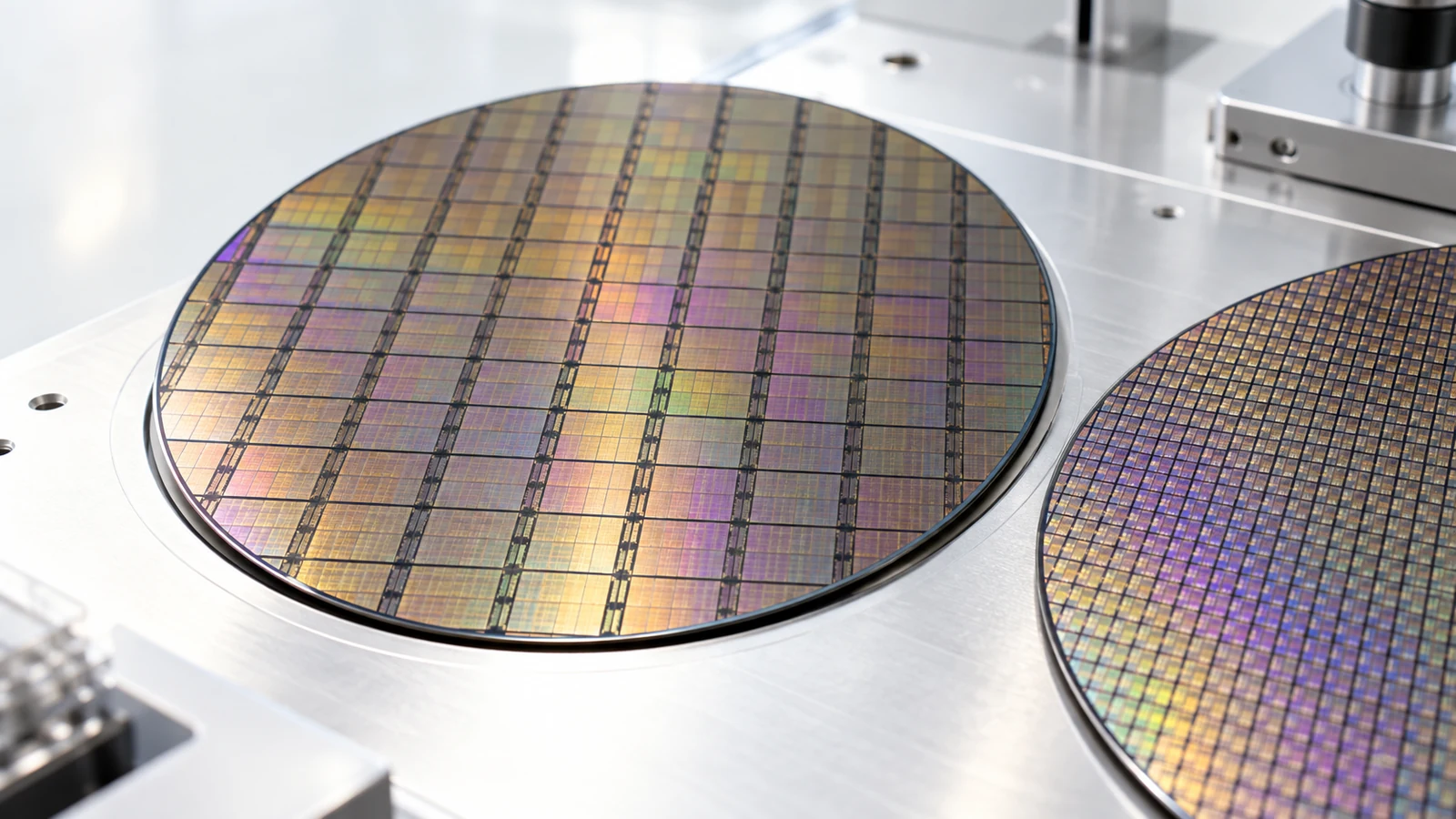
CXMT has put a large number on its latest DRAM manufacturing announcement: at least 50% more gross dies per wafer than its previous platform, normalized to an 8Gb baseline. The company said on September 20 that its fifth-generation G5 platform had entered mass production, alongside two 24Gb-per-die LPDDR5X products intended for smartphones and portable electronics.
That is a meaningful milestone if CXMT can sustain it at acceptable yield. It is also easy to misread. The announcement does not disclose how many gross dies are good, monthly capacity, qualified customers, or supply outside China. Most importantly for the AI market, LPDDR5X is not HBM.
What CXMT actually announced
At the World Manufacturing Convention in Hefei, CXMT described its G5 platform as having an 11.95 nm active-area half-pitch, a 45:1 capacitor aspect ratio, and a 6,762 nm core-cell-array height. It also said the platform raises gross dies per wafer by at least 50% from the prior generation on the normalized 8Gb comparison.
The product disclosure was specific in one important respect. CXMT identified two 24Gb-per-die LPDDR5X products, offered in 496-ball and 245-ball packages, and said both are in mass production for smartphones and portable electronics.
The limits of the disclosure are just as important. “Gross dies” describes how many potential dies fit on a wafer. It is not the same as good-die yield, packaged output, qualified shipments, or saleable memory bits. A denser layout can improve manufacturing economics, but only if fabrication yield, packaging, testing, and customer qualification keep pace.
Nor can CXMT’s half-pitch figure be ranked cleanly against another vendor’s process label. Vendors can define and measure process dimensions differently, and the announcement does not provide the full conditions needed for a like-for-like comparison.
| Disclosure | What it supports | What it does not establish |
|---|---|---|
| At least 50% more gross dies per wafer, normalized to 8Gb | A company-reported density and potential output improvement over CXMT’s prior platform | Good-die yield, usable-bit output, production volume, pricing, or customer qualification |
| Two 24Gb LPDDR5X products in mass production | A mobile and portable-device memory milestone | Sustained monthly shipments, worldwide availability, or allocation by customer and region |
| G5 process metrics | Specific characteristics of CXMT’s announced platform | Direct process superiority over rivals without common definitions and test conditions |
Why LPDDR5X is not the HBM answer
The distinction matters because “AI memory” now covers products with very different jobs. Micron describes LPDDR5X as low-power memory for mobile and edge systems. That makes CXMT’s products relevant to phones, portable devices, and potentially other systems designed around low-power DRAM.
HBM4, by contrast, is stacked memory built for GPU-oriented AI and high-performance-computing systems. It depends on bandwidth, stacking, packaging, integration, and qualification requirements that a conventional LPDDR5X announcement does not satisfy.
CXMT’s launch therefore does not demonstrate HBM3E or HBM4 capability, add confirmed GPU-memory supply, or directly resolve data-center HBM shortages. Any such conclusion would run beyond the disclosed evidence. There is also no confirmed HBM roadmap in the announcement.
That does not make the G5 launch irrelevant to AI. LPDDR5X can matter for edge devices and memory-constrained systems, and additional mobile DRAM supply could have indirect effects across the broader market. But the effect would be one step removed: more LPDDR5X competition could influence how suppliers allocate capacity, while HBM remains a separate technical and commercial contest.

The likely first impact is inside China
CXMT is no longer a negligible participant. The Associated Press, citing Counterpoint, reported that the company accounted for roughly 8% of global DRAM shipments in 2025 and about 9% in early 2026. The AP also identified restricted access to advanced chipmaking tools as a constraint on scaling.
If G5 production ramps successfully, Chinese smartphone and portable-device makers are the most obvious early beneficiaries. A larger domestic source of LPDDR5X could strengthen China’s semiconductor supply chain and give device manufacturers another option. Incumbent mobile-memory suppliers, meanwhile, could face more pricing pressure where CXMT products are qualified and available.
Global effects are less certain. “Mass production” does not tell buyers the monthly output, geographic allocation, customer list, pricing, or qualification status outside China. If most output remains focused on domestic customers, China could see a meaningful supply improvement without an equally large change in global consumer memory prices.
That caveat matters in a tight market. TrendForce has reported that AI infrastructure demand is crowding out consumer DRAM capacity, while its mobile DRAM pricing page displayed an estimated 8% to 13% quarter-over-quarter increase for the third quarter of 2026. More qualified LPDDR5X supply could eventually counter some pressure, but CXMT’s announcement alone is not evidence that prices will fall.
A credible milestone with an incomplete commercial picture
The strongest reading of G5 is also the narrowest: CXMT says it has moved a denser DRAM platform and two high-capacity LPDDR5X products into mass production. If the company converts the claimed gross-die gain into acceptable good-die yield and sustained shipments, it could become a more consequential source of mobile memory and reinforce China’s domestic chip ecosystem.
The weaker reading is that one density metric settles the competitive picture. It does not. Buyers still need evidence on yield, packaging and test performance, qualification, pricing, volumes, and availability. Restricted equipment access remains a potential scaling constraint.
The next useful disclosures are practical rather than promotional: sustained monthly wafer output, good-die yield, named or otherwise verifiable customer qualification, pricing, allocation beyond China, and independently verified progress on any HBM program. Until those appear, CXMT’s G5 should be treated as an important LPDDR5X manufacturing milestone—not as proof that the AI accelerator memory bottleneck has been broken.
Key takeaways
- CXMT says G5 produces at least 50% more gross dies per wafer than its previous platform on an 8Gb-normalized basis; that is not a disclosed good-die-yield result.
- The announced 24Gb products are LPDDR5X for smartphones and portable electronics, not confirmed HBM for GPUs or data-center accelerators.
- China’s device ecosystem may benefit first, while the effect on global supply and pricing depends on undisclosed output, qualification, allocation, and yield.
- The announcement is commercially significant, but its most important production and customer metrics remain unknown.